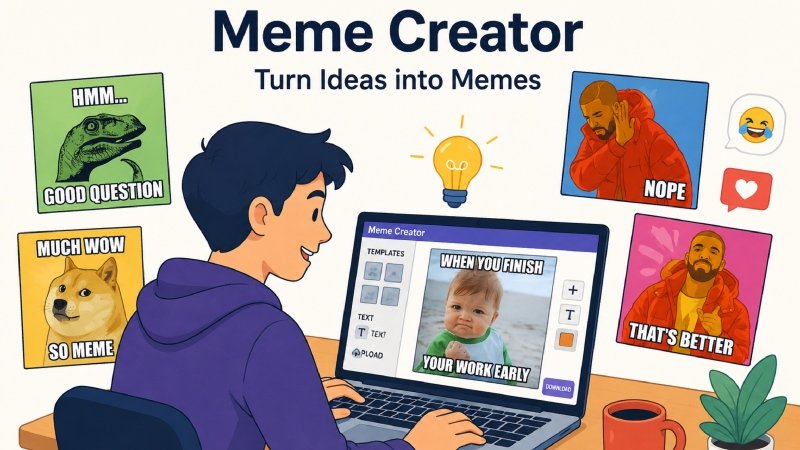
A funny image, a clever caption, or a familiar reaction can sometimes say more than a long explanation. This is one of the reasons memes have become such an important part of online culture. They allow people to react to situations, share opinions, and express emotions in a format that is quick, visual, and easy to understand.
What started as casual internet humor has grown into a creative form of communication used by millions of people. Memes can appear in social conversations, entertainment content, online communities, and even marketing campaigns. Their popularity continues because they are flexible enough to change with new trends and everyday experiences.
Why People Connect With Memes
One of the strongest qualities of a meme is its ability to make an ordinary situation feel familiar. A person may see a meme about a difficult Monday, a confusing conversation, or an unexpected problem and immediately recognize the situation.
This sense of recognition encourages people to interact with content. They may send it to a friend, post it on their social profile, or add their own comment. In this way, memes often become part of a larger conversation rather than remaining as standalone images.
Their short format also works well with modern online habits. People often browse content quickly, so visual messages that can be understood within a few moments have a natural advantage.
The Creative Process Behind a Good Meme
Although memes may appear simple, creating an effective one often requires a good sense of timing and observation. The creator first needs an idea that people can understand or relate to.
The next step is finding a visual that supports the concept. This could be a reaction, an everyday scene, an illustration, or an original image. The selected visual should strengthen the message instead of distracting from it.
The caption is equally important. A long explanation can weaken the humor, while a short and well-timed phrase can make the entire idea work. The goal is to give viewers enough information to understand the situation without making the content feel complicated.
Making Meme Creation More Accessible
In the past, creating visual content often meant using complex editing software or learning multiple design techniques. Today, the process can be much more straightforward. Anyone with an idea can experiment with images and text without needing to become a professional designer first.
A meme creator can help simplify the process by providing a practical way to combine visual elements and captions. This allows users to focus more on their ideas while experimenting with different styles and formats.
The ability to make quick changes is also useful. A creator can test different captions, try alternative images, and adjust the layout until the final result communicates the intended message clearly.
Humor Is Not the Only Purpose
While comedy remains the most common use of memes, visual formats can also be used to share observations, reactions, and opinions. Some memes highlight common experiences, while others comment on popular topics or everyday situations.
This versatility gives creators plenty of room to develop their own style. One person may prefer simple jokes, while another may focus on clever observations or visual storytelling.
Businesses can also use this format carefully to make their social media content more relatable. When a meme fits naturally with a brand’s audience and personality, it can encourage engagement without feeling like a traditional advertisement.
How to Make Content More Memorable
A memorable meme usually has a clear idea. If the viewer needs to spend too much time figuring out the message, the content may lose its impact.
The visual and written elements should support each other. The image should create the right mood, while the caption should add context or deliver the main point. Good spacing and readable text also make a difference, especially when the content is viewed on a small phone screen.
It is also useful to consider originality. Familiar formats can be helpful, but adding a personal angle can make a meme feel more interesting and less predictable.
Finding Inspiration in Everyday Life
Meme ideas do not always come from major events or popular trends. Everyday life provides endless inspiration. A small mistake, an awkward moment, a common habit, or an unexpected reaction can become the foundation for engaging content.
Paying attention to these moments can help creators develop ideas that feel authentic. People often respond strongly to content that reflects situations they have personally experienced.
The best ideas are sometimes the simplest ones because they are easy for a wide audience to understand.
The Future of Visual Online Communication
As online platforms continue to focus on visual content, memes are likely to remain an important part of digital communication. Their flexible format allows them to change quickly, adapt to new trends, and reflect the way people communicate at a particular moment.
For creators, memes offer a simple way to experiment with humor, storytelling, and design. For audiences, they provide quick content that can entertain, inform, or create a feeling of connection.
Conclusion
Memes have become much more than simple internet jokes. They are a creative way to communicate ideas, share experiences, and connect with other people online.
A successful meme begins with an interesting observation and becomes stronger when the image and caption work together. With creativity, timing, and a clear understanding of the audience, even a simple concept can become engaging content that people enjoy sharing.